 |
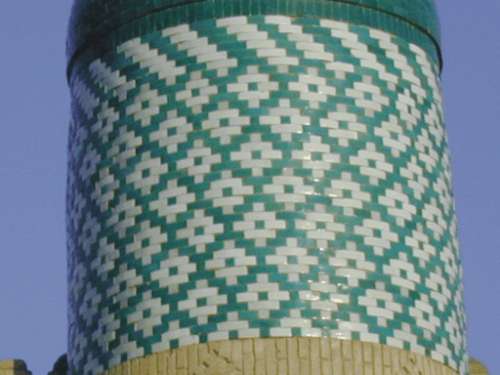 |
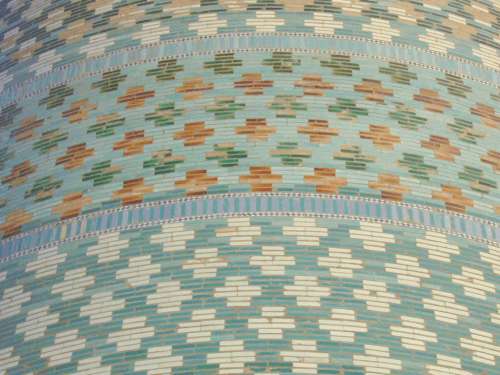
At sunset the city of Khiva gleams with a deep burnished bronze as the sun reflects off the mud brick walls. Contrasting these warm tones are the dazzling flashes of blue, green and turquoise tiling for which Khiva is famous. The Kaltor Minor and dome of the Pakhlavan Mahmoud Mausoleum shimmer with their deep green glazed bricks whilst the intricate blue and turquoise majolica designs which weave across the Khan's residences soothe the eye on even the hottest of summer days..
 |
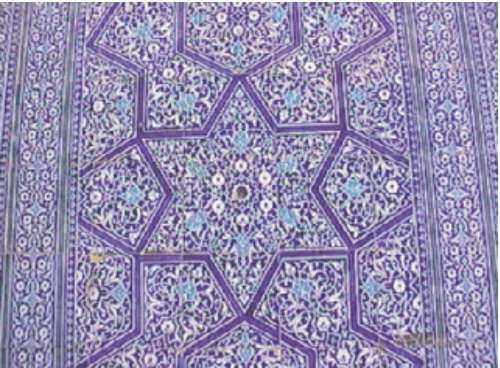 |
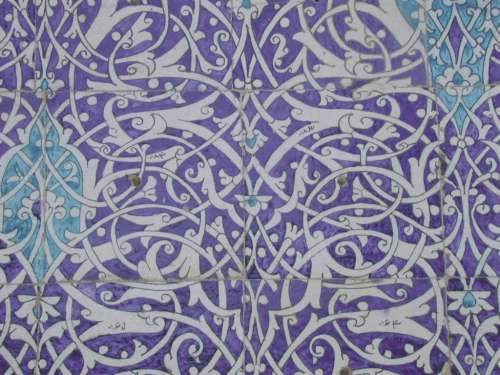
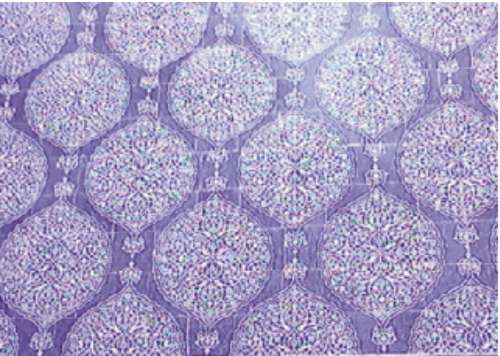
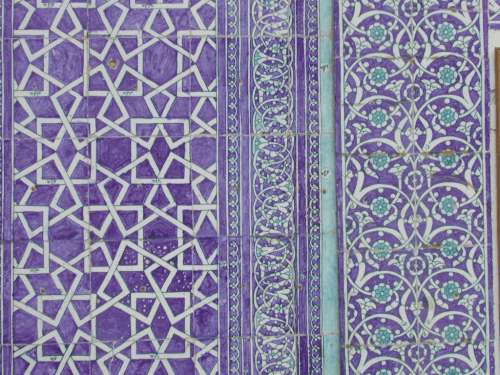
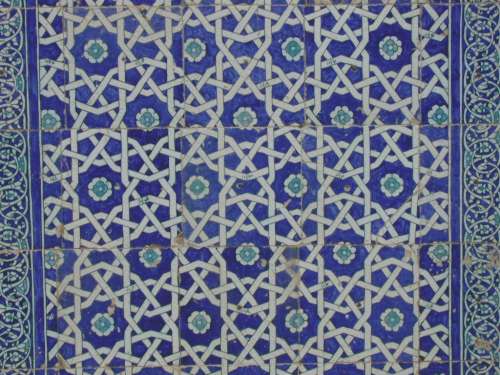
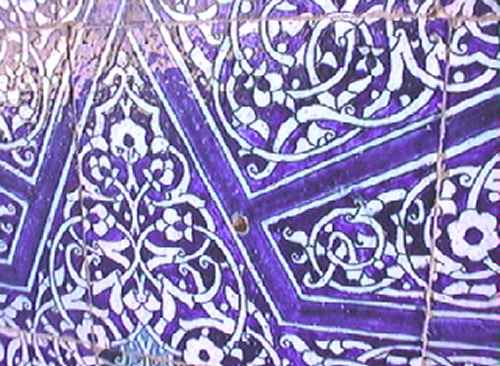
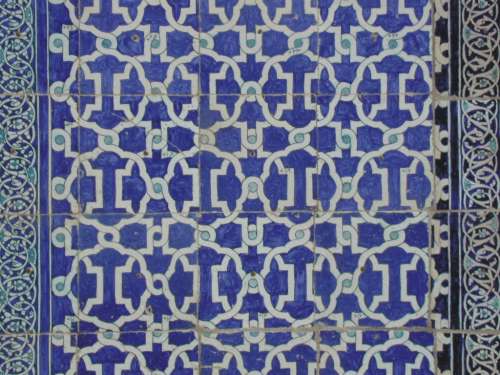
The deep blue, white and turquoise (which means 'colour of the Turks') floral motifs of Khiva's majolica tiling originate from the island of Majorca. Their cooling colours became popular in the desert heat of North Africa and rapidly spread right across the Muslim world. In the mid-eighteenth century the invading Persians introduced the style to Khiva and, although the colours had been used before, the intricate flowing patterns pleased the Khan and the tiles remained long after the raiders had been repelled.
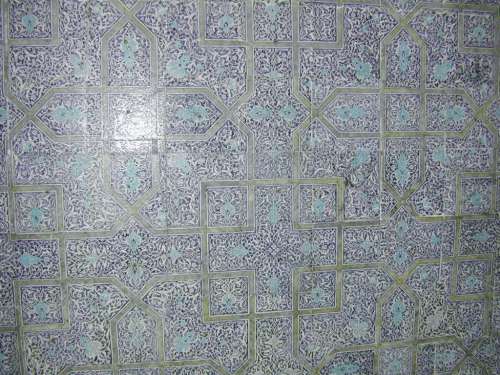 The
tiles display the gurikh style of elaborate weaving patterns said to represent
eternity. However in the less staid religious climate of Khiva plant and
flower motifs were also incorporated, despite the Koranic injunction against
depicting any living being. Unlike Bukhara and Samarkand, tiles were never
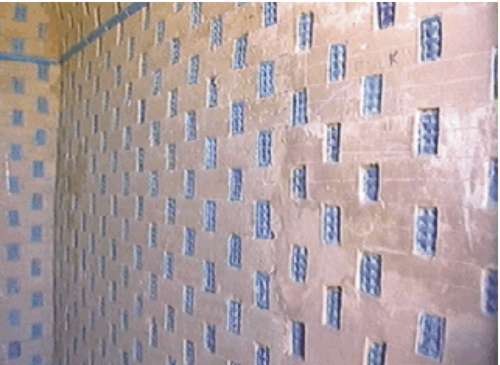
used as mosaics in Khiva. Instead majolica tiles were nailed into the
walls through a small hole in the centre of each one. The designs would
then continue faultlessly across the expanse of asymmetric tiles in mesmerising
detail.
The
tiles display the gurikh style of elaborate weaving patterns said to represent
eternity. However in the less staid religious climate of Khiva plant and
flower motifs were also incorporated, despite the Koranic injunction against
depicting any living being. Unlike Bukhara and Samarkand, tiles were never
used as mosaics in Khiva. Instead majolica tiles were nailed into the
walls through a small hole in the centre of each one. The designs would
then continue faultlessly across the expanse of asymmetric tiles in mesmerising
detail.
 |
 |
 |
 |
 Allah
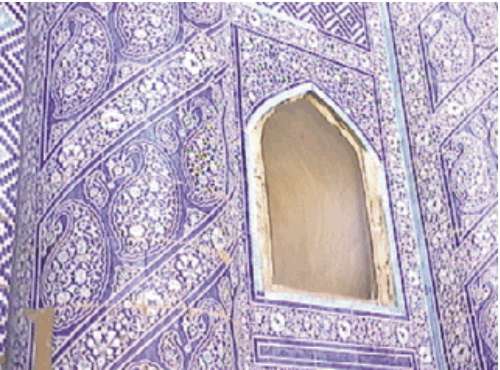
Kuli Khan was particularly fond of the tiles' cooling colours and decided
to have all his aywans entirely decorated with them. To cover such large
areas, the tiles were not all produced or fired in the same kiln.
Allah
Kuli Khan was particularly fond of the tiles' cooling colours and decided
to have all his aywans entirely decorated with them. To cover such large
areas, the tiles were not all produced or fired in the same kiln.
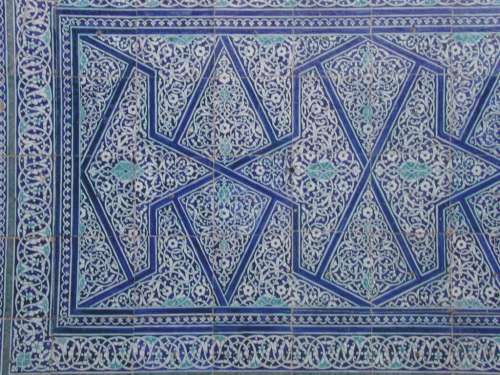 Arabic
numbers were painted onto each tile so that they could later be assembled
like a large jigsaw puzzle onto the aywan walls.
Arabic
numbers were painted onto each tile so that they could later be assembled
like a large jigsaw puzzle onto the aywan walls.
 |
 |
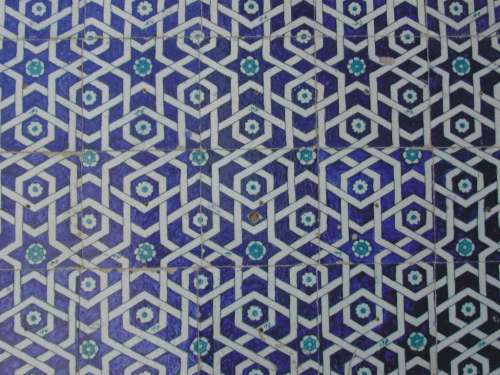
The deep blue colour was obtained by firing the tile at exactly the right temperature with a glaze made from a desert plant. The procedure was a closely guarded secret and by the 1960's there was only one aging ceramist who remembered the traditional method. Thrilled that the Soviets had decided to begin restoration of the Ichan Kala, he offered to divulge the mystery of the deep blue colouring to the Russian archaeologists. Unfortunately they showed no interest in his old-fashioned ways, preferring instead to use modern, chemical pigments. The secret was lost and the walls of the Tosh Hauli have been scarred with the result. Tiles added in restoration are easy to distinguish as they fail to achieve the deep blue of the originals and look as though they have been applied with a marker pen.
Zoroastrian Butterfly Tiles
 |
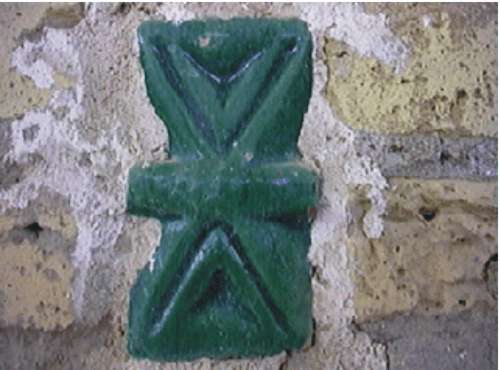 |
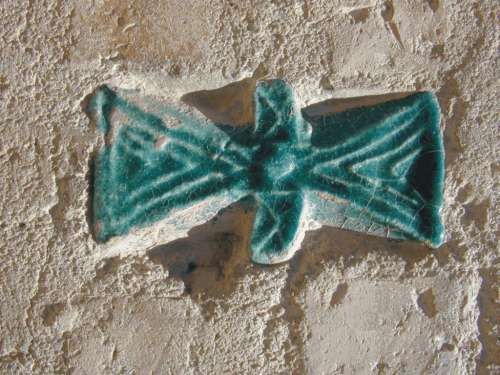
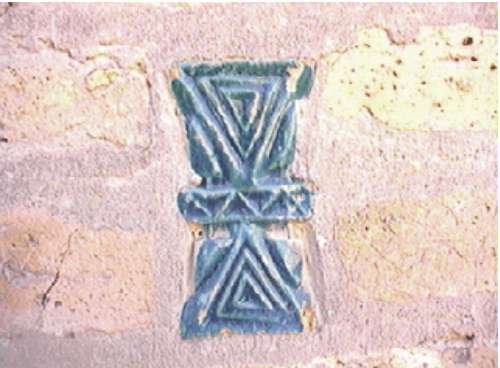
Many of the buildings in Khiva are dotted with deep green butterfly-shaped tiles. This design originates from Zoroastrian times and symbolises a whole and balanced life. The two inward-pointing triangles represent good thoughts and good words while the narrow strip in the middle represents good works. The older tiles bear triangular markings whilst the newer ones are generally blank.
 |
 |
The tiles should be placed vertically but many of the slaves working
on the madrassahs had no knowledge of Zoroastrianism and placed them horizontally.
The Mohammed Amin Inaq Madrassah is a particularly good example of the
sheer number of these tiles used in decoration. Older tiles can be seen
in Hojelli near Nukus, in the underground caravanserai there.
 Tour
Links:
Tour
Links: Guidebook
Links:
Guidebook
Links:| Aywans
| Madrassahs | Mausoleums Mosques and Minaretes | Yurts | Tiles |